Pharmacy Consistency is an Operational KPI
June 17, 2026
Reducing Resident Risks of Antipsychotic Drugs
June 24, 2026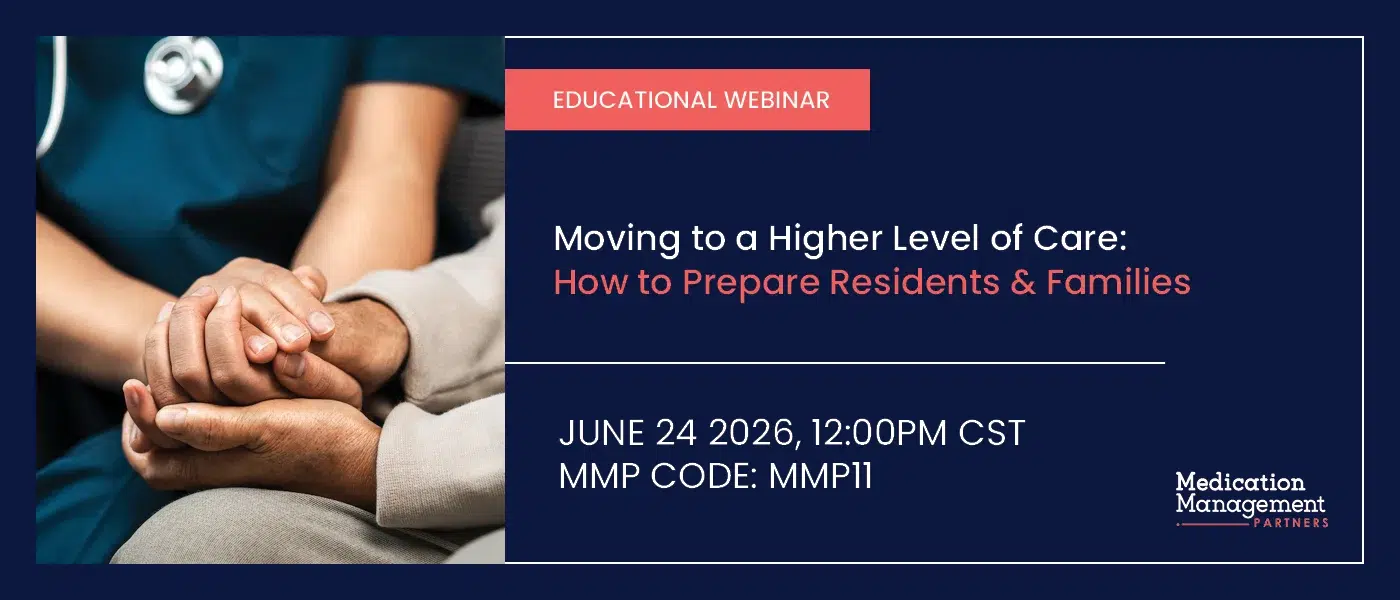
Moving to a higher level of care
Moving to a Higher Level of Care: How to Prepare Residents & Families
Date: Wednesday, June 24, 2026
Webinar time: 12:00 PM – 1:00 PM Central Time
On average, an assisted living resident remains in a facility for 2–5 years before it becomes necessary to transition to a higher level of care. While there are always exceptions, a portion of residents will eventually require more support than can be safely provided in the current setting. By that time, the residents have often developed strong emotional ties—establishing routines, forming friendships, and building a sense of home. Because of this, many residents (and families) may not fully recognize or accept the changes in health status that necessitate a move. This makes the conversation about transitioning care particularly challenging. It is rarely easy to initiate, and many staff feel unprepared or uncomfortable delivering such news. Avoiding or delaying the discussion, however, can lead to increased risk, crisis-driven decisions, and emotional distress for everyone involved.
In this session, we will explore common barriers to these conversations, including emotional resistance, fear of conflict, and uncertainty about timing. We will also discuss practical strategies to support more effective communications, such as choosing appropriate times and settings for the discussion, adopting attitudes that promote empathy and calmness, and preparing yourself with clear, resident-centered messaging. The goal is to approach these conversations with confidence, compassion, and a focus on safety and quality of care.
- Demonstrate increased knowledge and the ability to recognize when assisted living residents require a transition to a higher level of care, including the identification of key clinical and psychosocial indicators.
- Demonstrate improved application of communication strategies to effectively address emotional and situational barriers and facilitate resident- and family-centered discussions about care transitions.
- Demonstrate increased confidence and competence in planning and conducting timely, respectful, and safe transition conversations that support quality care outcomes.
Presented by: Marge Jordon, MN – LTC Consultant & Educator
__________________________________________________________________
CLICK HERE » to register. When registering, use code MMP11 to receive proper credit.
CLICK HERE » to download participation instructions.
Call Brenda Brinka at 708-710-3003 or email brenda.b@mmprx.com to learn how MMP can help your community succeed and grow.
All copyrights, trademarks, service marks, and trade names are the property of their respective owners.